Every driver picks up rules of thumb. Some save you trouble. Others sound right and quietly raise your risk. This article covers night driving safety, weather and work zones, and sorts eight common beliefs into myth and fact, with a habit to use for each.
Night driving safety myths
Myth 1: "My eyes adjust, so I see fine at night."
Fact: Your eyes adapt, but slowly, and a single bright oncoming light can undo it. Your vision is also worse for judging distance and spotting dark objects such as a tire carcass or a pedestrian in dark clothing.
Habits that help: keep the windshield clean inside and out, dim dash lights, and look at the right edge line when traffic approaches instead of into the glare. Replace worn wipers before the dark months, since streaks scatter light.
Myth 2: "If I can see the road, I can stop in time."
Fact: Low beams only light so much road. If your speed is too high, you may reach an obstacle before you can see it and stop. Adjust your speed to the distance you can actually see, not the posted limit.
Myth 3: "Coffee and an open window will keep me alert."
Fact: These tricks are brief at best. Drowsiness is a warning that you need rest, and it can lead to micro-sleeps you do not notice. The fix is a real break or a nap in a safe place. Planning stops ahead helps, so you are not hunting for parking while tired. A directory of truck stops and rest areas along your route makes that easier.
Weather myths
Myth 4: "A heavy truck just plows through rain."
Fact: Weight does not give you traction on standing water. The first minutes of rain, when oil rises on the pavement, can be slick. Tires with low tread are a real problem in wet conditions, so check tread depth and inflation as part of your regular inspections. If your tires are near their limit, a tire shop visit is cheaper than a ditch.
Myth 5: "Cruise control is fine in any weather."
Fact: On wet, icy or snowy roads, cruise can keep applying power when you want to ease off, and that can upset traction. Use it only when the surface is dry and predictable.
Work zone safety: facts that matter
Myth 6: "Work zones are only dangerous when workers are present."
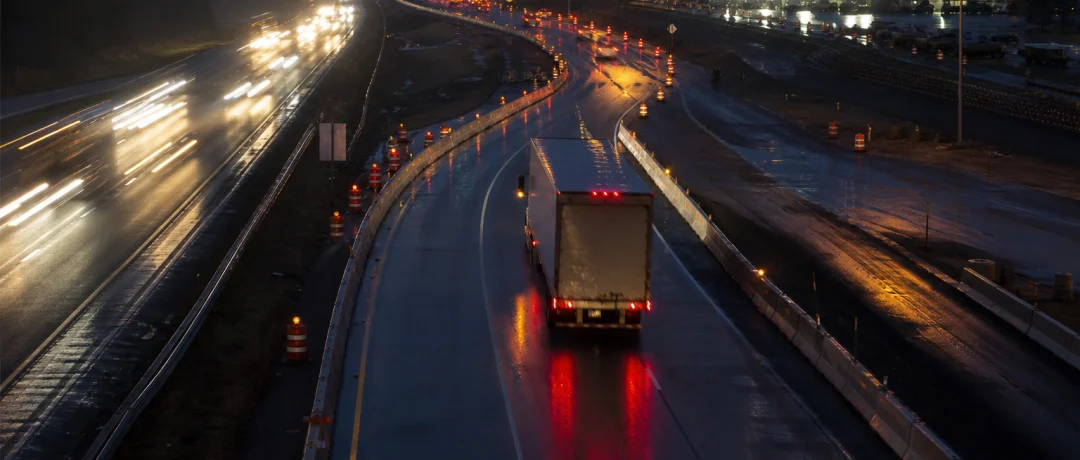
Fact: Narrowed lanes, shifted barriers and lowered speed limits are hazards even on a quiet Sunday. Barriers leave little margin for a wide load or a trailer that tracks off. Treat the zone as active at all times and follow posted limits, which may be enforced more strictly there.
Myth 7: "Tailgating is okay if everyone is crawling."
Fact: Slow traffic stops suddenly. With a loaded trailer, you need more room than a car, not less. Stay back, keep your eyes well ahead, and watch brake lights several vehicles up. Merge early when a lane is closing, and let others in, instead of racing to the taper.
| Belief | What to do instead |
|---|---|
| I can see, so I can stop | Slow down to match your visible distance |
| Caffeine fixes tiredness | Stop and rest |
| Cruise is always fine | Use it on dry roads only |
| Work zones are safe when empty | Follow limits and stay centered |
Myth 8: "Pre-trip inspections are just paperwork."
Fact: Lights, mirrors, wipers, brakes and tires all decide how safe you are in the dark and in bad weather. A burned-out marker light or a cracked windshield is a problem at night, because cracks catch glare. Fix small defects early. A broken wiper blade costs little, and a roadside breakdown beside a work zone barrier is about as bad a spot as you can pick.
If something goes wrong
Even careful drivers break down. If it happens near a work zone, get as far from traffic as you can, turn on hazards, and set out warning devices as required. Stay out of travel lanes and call for help from a safe position. Keep numbers for towing and repair providers saved before you need them, so you are not searching while trucks pass at speed.
Key takeaways
- Drive to the distance you can see at night, not to the speed limit.
- Tiredness needs rest, not coffee.
- Skip cruise control on wet or slick roads, and keep tires in good shape.
- Treat every work zone as active and leave extra following distance.
- A thorough pre-trip, including lights and glass, prevents many night problems.