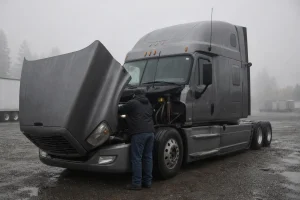
Most cold-weather breakdowns start small: a bit of water in the fuel, a tired air dryer, a filter that was due weeks ago. This guide shows you how to winterize your truck’s fuel and air systems in a few hours this month, while the weather is still forgiving and shops are not yet booked solid.
Why the fuel and air systems come first
Diesel does not like the cold. Paraffin wax in the fuel can thicken and clog filters, and any water in the tank can freeze into slush. On the air side, moisture that your dryer fails to remove turns to ice in valves, lines and brake chambers. Both problems can leave you unable to start or unable to release the brakes.
Step-by-step: winterize your truck fuel and air systems
- Check your service records. Find out when the fuel filters, water separator and air dryer cartridge were last changed. Compare that with the intervals in your engine and dryer manuals. If you are close, replace now rather than in January.
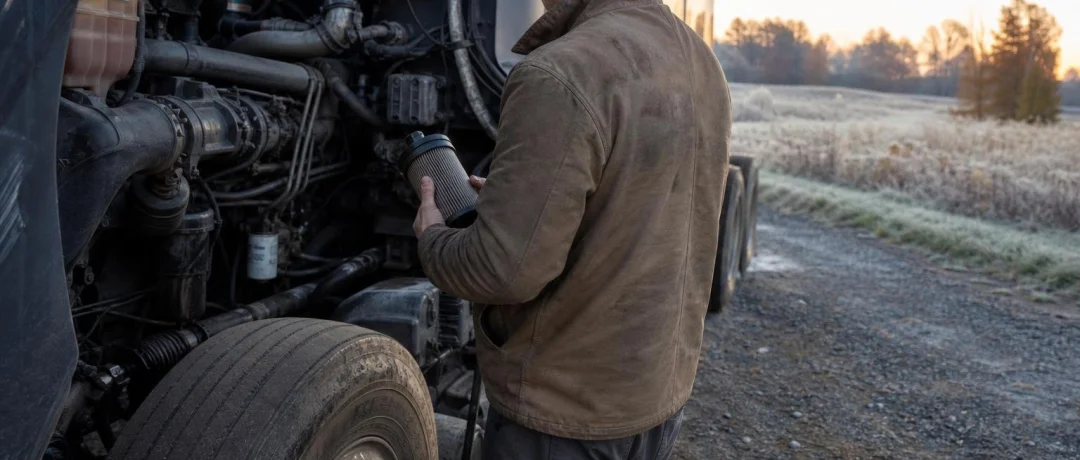
- Replace fuel filters. Install fresh primary and secondary filters. Fill them as the manufacturer directs so the engine does not struggle to prime. Keep a spare set in the truck if you run northern routes.
- Drain the water separator. Drain it until the fluid runs clean. Look at what comes out: heavy water or sludge means you should inspect the tanks and think about where you have been fueling.
- Review your fuel additive plan. Many drivers use an anti-gel or de-icing additive. Follow the label on dosage and timing, and add it before the fuel gets cold, since additives work best as prevention, not as a cure for fuel that has already gelled.
- Keep tanks reasonably full. A fuller tank has less air space, so less condensation forms inside. It also gives you a buffer if you get stuck in traffic or a closure.
- Service the air dryer. Replace the desiccant cartridge if it is due, and check that the purge valve cycles when you build and release pressure. A dryer that never purges or leaks constantly needs attention.
- Drain the air tanks. Open each drain and see what comes out. A little moisture is normal. A steady stream of water or oily emulsion points to a dryer or compressor problem for a shop to diagnose.
- Inspect air lines and fittings. Look for chafing, cracked rubber, loose fittings and hissing leaks. Cold stiffens old lines, and small leaks become big ones. Do not forget the gladhand seals between tractor and trailer.
- Test the heating aids. Check block heater cords, plugs and, if equipped, fuel heaters and grid heaters. A cracked cord is easy to replace now and miserable to find at 5 a.m. at zero degrees.
Know the signs of trouble
Fuel system
- Loss of power under load, especially on grades
- Hard starting that improves after sitting
- Water-in-fuel warning light or frequent separator fill-ups
- Black or heavy smoke from a clogged filter starving the engine
Air system
- Slow pressure build-up or pressure that drops quickly with the engine off
- Brakes that are slow to release in the morning
- Oil or water in the tank drains
- Hissing at the dryer, valves or gladhands
Handling the trailer side
Winterizing is not only a tractor job. Check trailer air lines, glad hand seals, and brake chambers for leaks and damage. If you pull reefers, make sure the unit’s fuel is also treated for cold and its filters are current. If the trailer sits at a yard for long stretches, drain its air tanks regularly.
When to take it to a shop
Handle the routine filter swaps and drains yourself if you are comfortable and have the tools. Bring in a professional for compressor problems, persistent oil in the air system, fuel system air leaks, or anything involving injectors and high-pressure lines. Use the directory to find a heavy-duty repair shop near your route, and call ahead to ask about lead times, since pre-winter weeks fill up fast.
Plan for the road
Even a well-prepared truck can have a bad day. Carry spare fuel filters, a filter wrench, gloves, a flashlight, and the number of a trusted towing and recovery provider along your lanes. When you fuel in cold regions, choose busy stations with high turnover, since fresh, properly blended winter fuel lowers your risk.
Frequently asked questions
When should I add anti-gel additive?
Before temperatures drop to the range where your fuel could gel, and according to the product label. Adding it after the fuel has gelled is much less effective.
How often should I drain air tanks?
Many drivers check them regularly, even with a dryer fitted. Follow your manufacturer’s guidance, and increase checks if you see moisture.
Is a block heater enough on its own?
No. It helps with starting, but it does nothing for gelled fuel in the tank or ice in the air system.