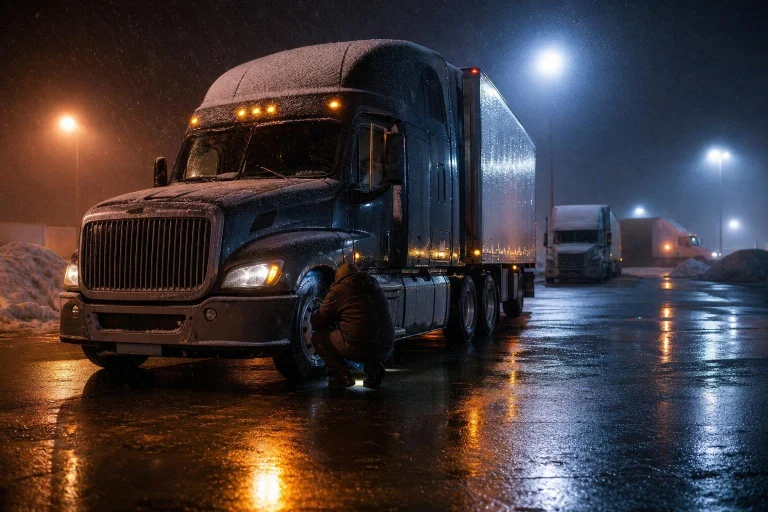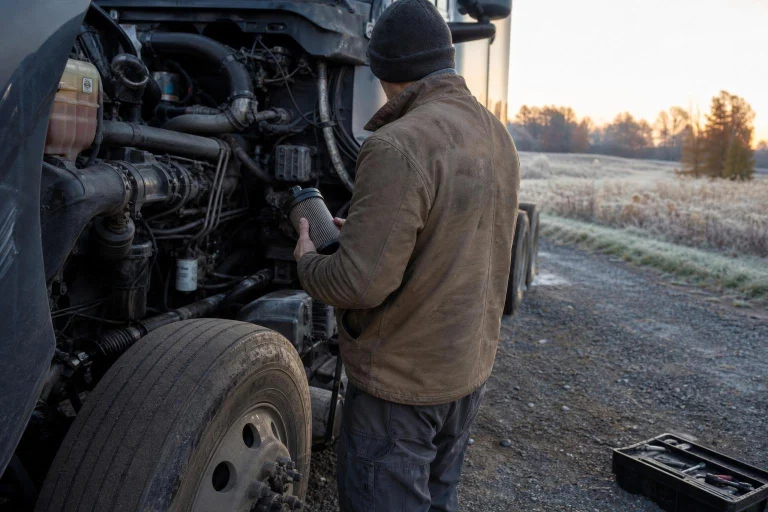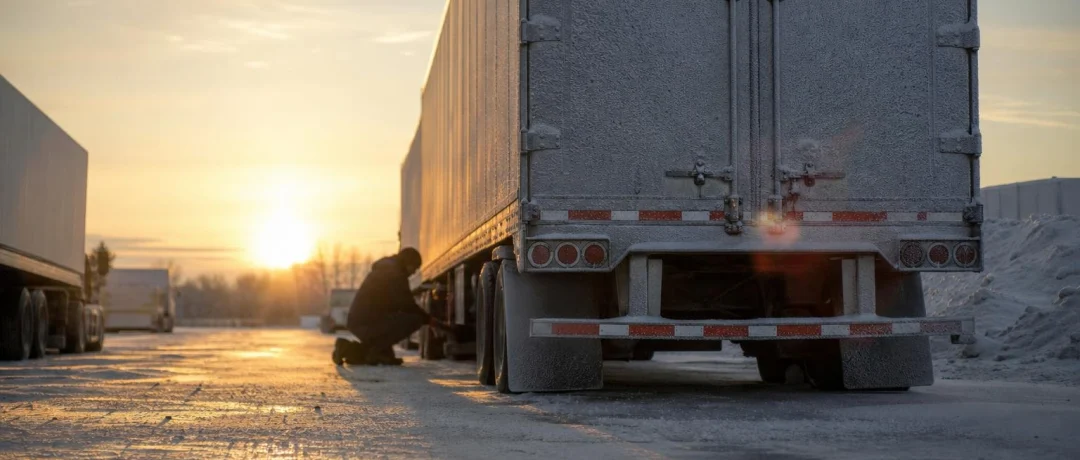
Most cold-weather advice is about the tractor. The trailer behind it freezes, sticks and wears out just as fast. This article answers common questions about winter trailer care, so you can catch problems in the yard instead of on the shoulder.
Why do trailer brakes freeze, and what can I do?
Moisture in the air system is the usual cause. Water collects in tanks and lines, then freezes in valves and fittings. Wet snow and slush packed around brake chambers, slack adjusters and drums can also hold brakes on.
- Drain the air tanks as your maintenance schedule says, and check that the air dryer is working.
- Look for oil or water coming out of the tank drains. Either one means the dryer needs attention.
- Do not set the trailer parking brake for long stops in freezing, wet weather if you can chock the wheels safely instead.
- Clear packed slush from around the brake components during your walkaround.
How do I keep trailer doors and latches from freezing shut?
Water gets into door seals, hinges and latch mechanisms, then freezes. Prevention is easier than thawing.
- Clean and lubricate hinges and latch parts with a product made for cold weather.
- Treat rubber door seals with a seal conditioner so they don’t stick to the frame.
- Check that drain holes in the door area are open.
- Avoid hot water on frozen parts. It can refreeze quickly and damage seals.
Padlocks and lock cylinders freeze too. A lock that is stiff in the fall will often fail in January, so service it now. A locksmith can replace worn cylinders and rekey trailer locks.
What lighting problems show up in winter?
Road salt and moisture attack connectors, and the seven-way plug takes the worst of it. Corroded pins cause flickering lights or no lights at all.
- Inspect the plug and socket for green or white corrosion.
- Check that the pigtail and cable aren’t cracked or stiff from cold.
- Look at the lamp housings for cracks that let in water.
- Wipe lenses clean at every stop. Road spray covers them fast.
Dirty or dim lights are a common reason for roadside inspection attention, and they matter more when daylight is short.
Do trailer tires need different care in winter?
Cold air lowers tire pressure, so tires that looked fine in October can be low in a cold snap. Check pressure when tires are cold, and use a calibrated gauge. Look at tread depth, sidewall cuts and valve caps. Dual tires should match in size and be inflated alike, since a soft tire puts extra load on its partner.
Spare tires and wheel-end seals are worth a look too. A leaking hub seal in winter can contaminate brakes.
What should I know about winter reefer operation?
Reefers are not only for hot loads. In freezing weather, many shippers want product kept above a minimum temperature, so a unit that can heat matters as much as one that can cool.
- Confirm the set point and mode with the shipper, and whether continuous or cycle-sentry operation is expected.
- Check fuel level and quality. Reefer fuel tanks should be treated against gelling just like the tractor’s.
- Test the defrost cycle before you need it.
- Inspect belts, hoses and battery connections. Cold exposes weak ones.
- Make sure air chutes and bulkheads are intact so air moves around the load.
How do I protect the floor and cargo from salt and moisture?
Salt-laden slush carried in by boots and forklifts can corrode floors and cross members. Sweep out the trailer after each load, and wash the undercarriage when temperatures allow. If you haul paper, food or other moisture-sensitive freight, check the roof and walls for leaks and the floor for damp spots before accepting the load.
Should I wash the trailer in winter?
Yes, when you can do it safely. Salt and de-icing chemicals sit on frames, landing gear and wiring and keep working. Choose a wash that offers an undercarriage rinse and time it so the trailer can dry before a hard freeze, or you may end up with frozen doors and brakes. Dry the door seals after washing.
What should I carry in the cab for trailer problems?
- Spare bulbs, fuses and a test light
- De-icer and a lubricant rated for low temperatures
- Work gloves, a scraper and a small shovel
- A tire gauge and a flashlight
- Emergency numbers for mobile repair and towing along your route
Frequently asked questions
Do a full walkaround before each trip and a quick check at every stop where conditions are bad. Look at lights, tires, brakes, doors and landing gear.
Yes. Water and dirt in the gearbox and on the crank can freeze and make it hard to operate. Lubricate it per the manufacturer’s guidance and keep it clean of ice before cranking.
Call when brakes drag or won’t release, lights fail, a tire is damaged, or a reefer alarm can’t be cleared. Driving on with these problems risks safety, cargo and fines.
Search the directory by city or highway for trailer repair, tire service and reefer repair, and save a few numbers before your trip.
The short version
Winter trailer care comes down to dry air lines, free-moving doors, clean connections, correct tire pressure and a reefer you have tested. An hour of work now is cheaper than a night waiting for a service truck.