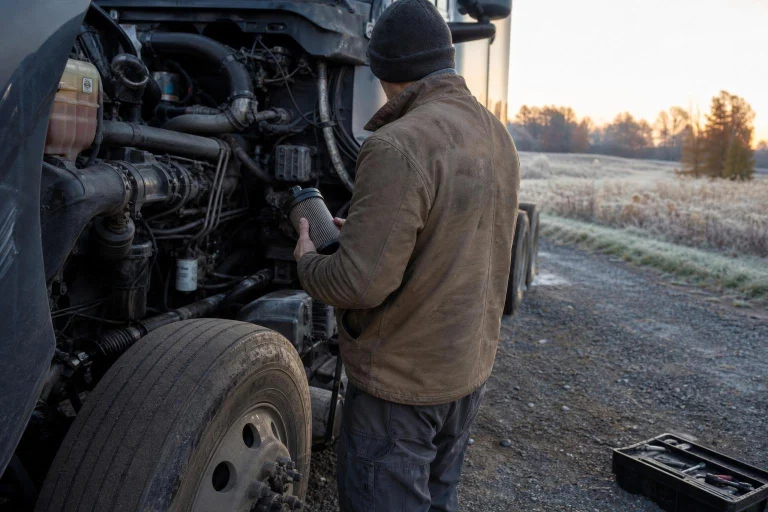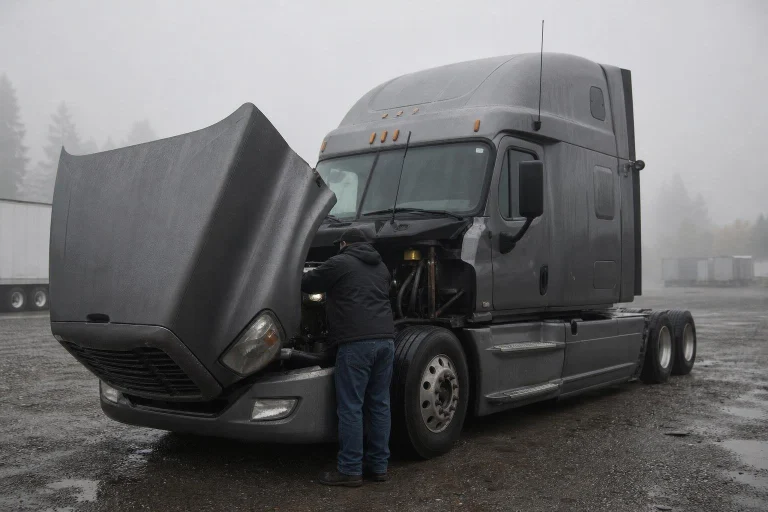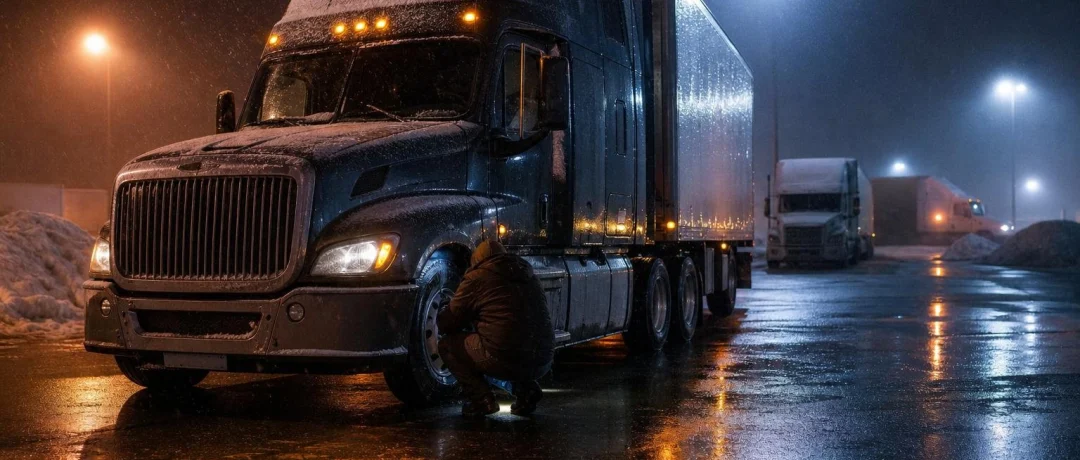
Cold weather doesn’t create most breakdowns. It exposes problems that were already there: a tired battery, a damp air system, a worn tire. This guide covers the winter pre-trip checks that matter most for owner-operators and small fleets running in the northern states, and what to do when you find something.
Why winter pre-trips need extra time
A standard pre-trip catches safety defects. In winter, add a few minutes for things that fail only in the cold: frozen air lines, gelled fuel, weak starting power and iced-up lights. Ten extra minutes in the yard is cheaper than a tow from a remote stretch of interstate.
Do the walk-around in the same order every time, and do it before the engine is fully warm. Some problems, like hard starting and slow air build-up, show up best on a cold start.
Start with the cold-start test
Pay attention to how the engine starts before you check anything else.
- Cranking speed: Slow, labored cranking points to a weak battery, bad cables or thick oil.
- Warning lights: Note anything that stays on after start-up, and don’t clear it and move on.
- Idle and smoke: Rough running or heavy white smoke can mean fuel or injector trouble that gets worse in the cold.
- Block heater and cord: If you use one, check the cord for cracks and the plug for corrosion.
Batteries and charging system
Batteries lose capacity as temperatures drop, while the engine needs more power to turn over. Look at terminals for white or green corrosion, make sure cables are tight, and check hold-downs. If a battery is several years old or has been slow to crank, have it load-tested at a shop before the hard cold arrives. Also confirm the alternator is charging properly.
Fuel system
Diesel can gel in extreme cold, and water in the system can freeze and block filters.
- Drain water from fuel filters and separators.
- Replace fuel filters if they’re near their service interval.
- Use winterized fuel or an anti-gel additive as your supplier or engine maker recommends.
- Keep tanks reasonably full to limit condensation, and carry a spare filter.
Air brake system
Moisture in air lines is a classic winter failure. It freezes, and brakes can stick or fail to release.
- Drain all air tanks every day.
- Check the air dryer and its cartridge. If it’s overdue for service, don’t wait.
- Listen for leaks with the system fully charged and the brakes applied.
- Test the low-air warning and watch build-up time.
- Check glad hands and seals for cracks that get worse in the cold.
Avoid pouring in random de-icer products without checking what your shop or manufacturer recommends for your system.
Tires, chains and wheels
Tire pressure drops as temperatures fall, so check it cold with a reliable gauge. Look at tread depth on all positions, especially drive tires, and inspect sidewalls for cuts and bulges. Match tires to the work: aggressive drive tread helps in snow, but only when it has depth left.
Know your chain requirements for mountain passes and state rules. Carry a full set that fits your tires, and practice putting them on somewhere warm and dry rather than for the first time on a shoulder. Check lug nuts and look for rust trails or loose hardware around wheel ends.
Coolant, oil and belts
- Coolant: Test freeze protection with a proper tester, and check the level and hoses.
- Oil: Use the viscosity your engine maker specifies for cold weather, and don’t run past your change interval.
- Belts and hoses: Cold makes worn rubber crack. Replace anything glazed, frayed or soft.
- Heater and defroster: Make sure they work, because visibility is a safety item.
Lights, glass and wipers
Short winter days mean more driving in the dark. Clean every lens and test all lights, including marker and clearance lights, brake lights and turn signals. Check wiring connections and the trailer plug for corrosion from road salt.
Replace worn wiper blades with winter-rated ones, fill washer reservoirs with a cold-rated fluid, and inspect the windshield for chips. Cold temperatures can turn a small chip into a long crack, so have it looked at early.
Trailer checks that get missed
Trailers cause plenty of winter delays, and they’re easy to overlook.
- Check brakes, slack adjusters and chambers, and make sure nothing is frozen in place.
- Inspect door seals, latches and hinges. Lubricate with a product suitable for cold weather.
- Check landing gear operation before you need it.
- Look over the suspension, frame and floor for salt damage.
- For reefers, confirm the unit starts, holds setpoint and has enough fuel. Heat mode matters too when freight can’t freeze.
Keep the cab and kit ready
Even with a perfect truck, you can get stranded by weather or closures. Carry:
- Warm clothing, boots, gloves and a blanket
- Reflective triangles, a flashlight and spare fuses and bulbs
- An ice scraper, snow brush and small shovel
- Jumper cables or a jump pack
- Water, food and a phone charger
- Gloves and a defrosted-door plan, such as a lock de-icer kept outside the lock
Save a tow provider and a repair shop’s number for the routes you run, and share your location with dispatch or family on long, remote legs.
Know when to stop
If a pre-trip turns up a safety defect, such as a leaking air line, a bad tire or a failed light, fix it before rolling. Roadside repairs in winter are slower, more expensive and more dangerous. Keep records of what you inspected and fixed, which also helps with inspections and warranty claims.
Wrapping up
Winter pre-trip checks come down to power, fuel, air, rubber and visibility. Build the list into your routine, schedule overdue service before the first hard freeze, and find a trusted shop along your lanes ahead of time. Doing that makes a breakdown a lot less likely.